Loading page
Controls
Prevention, detection, and suppression claims from BASS, FLEX, and SAME. Each claim is the finding text, with the page it came from.
Prevention
Findings from BASS and FLEX on ignition and flame spread.
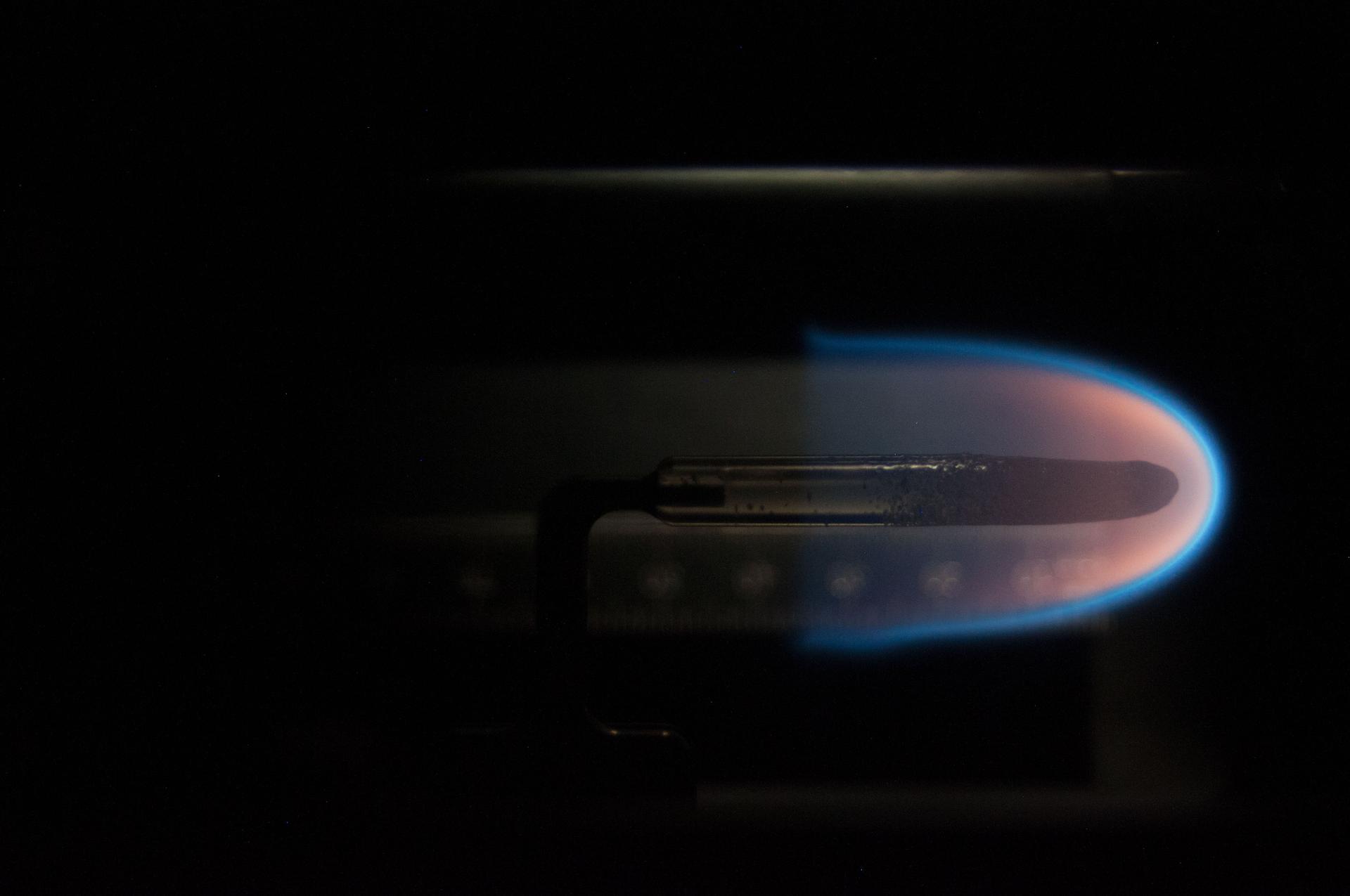
BASSPSI-26
These tests show the enhanced flammability in microgravity for this geometry, since, in normal gravity air, a flame self-extinguishes in the opposed flow geometry (downward flame spread).
PSI-26 Science Documents FlammabilityAspectsofFabric USNationalCombustion.2013, page 1
Materials in microgravity with adequate ventilation may burn more readily compared to normal gravity with all other conditions being identical (pressure, oxygen concentration, temperature, etc.).
PSI-26 Science Documents FlammabilityAspectsofFabric USNationalCombustion.2013, page 1
The custom-made cotton-fiberglass fabric performed very well, with none of the complications caused by the burnout of ordinary cellulosic fuel samples like paper.
PSI-26 Science Documents FlammabilityAspectsofFabric USNationalCombustion.2013, page 1
This is the first time that detailed transient flame growth data was obtained in purely forced flows in microgravity for a thin fuel with uniform burnout characteristics.
PSI-26 Science Documents FlammabilityAspectsofFabric USNationalCombustion.2013, page 1
For the opposed flow configuration, the flame quickly reached steady spread for each flow speed, and the spread rate was fastest at an intermediate value of flow speed.
PSI-26 Science Documents FlammabilityAspectsofFabric USNationalCombustion.2013, page 1
In the concurrent-flow configuration, flame size grew with time during the tests. A limiting length and steady spread rate were obtained only in low flow speeds (<= 10 cm/s) for the short-length samples that fit in the small wind tunnel.
PSI-26 Science Documents FlammabilityAspectsofFabric USNationalCombustion.2013, page 1
For concurrent flow, flame spread rate increased linearly with increasing flow.
PSI-26 Science Documents FlammabilityAspectsofFabric USNationalCombustion.2013, page 1
Opposed-flow flame spread rate increases with flow to a maximum when the flow speed is around 10 to 15 cm/s and then decreases at higher speeds.
PSI-26 Science Documents FlammabilityAspectsofFabric USNationalCombustion.2013, page 1
The concurrent-flow flame is longer and spreads twice as fast as the opposed-flow flame at 10 cm/s air flow speed.
PSI-26 Science Documents FlammabilityAspectsofFabric USNationalCombustion.2013, page 1
FLEXPSI-69
Ambient gas transport properties play an important role in determining flammability and combustion behaviors including burning rates and radiant heat output histories of the droplets.
Combustion of Methanol Droplets in Air-Diluent Environments with Reduced and Normal Gravity, page 1
When a laminar diffusion flame is established over a spinning, thermoplastic, polymer fuel disc in a quiescent, oxidizing environment, the polymer melts and flows radially outwards, causing some fuel to be lost and not transported to the diffusion flame.
Analysis of the melt phase of a rotating polymer disc supporting a diffusion flame, page 1
After considering measurement uncertainties, burning rates decreased appreciably as the initial droplet diameter increased for combustion in air but not for combustion in the oxygen/helium environments.
Combustion of Submillimeter Heptane/Methanol and Heptane/Ethanol Droplets in Reduced Gravity, page 1
Addition of either methanol or ethanol did not influence burning rates appreciably and burning rates were larger for the oxygen/helium environments than for air if initial droplet diameter dependences were accounted for.
Combustion of Submillimeter Heptane/Methanol and Heptane/Ethanol Droplets in Reduced Gravity, page 1
Burning rates were about 40% to 70% higher in normal gravity than in reduced gravity.
Combustion of Methanol Droplets in Air-Diluent Environments with Reduced and Normal Gravity, page 1
Methanol droplets had burning rates that were typically larger than 1-propanol burning rates by about 20% in reduced gravity, whereas in normal gravity, burning rate differences between the two fuels were significantly smaller.
Combustion of Methanol Droplets in Air-Diluent Environments with Reduced and Normal Gravity, page 1
Detection
Findings from SAME on the smoke a spacecraft detector would see.
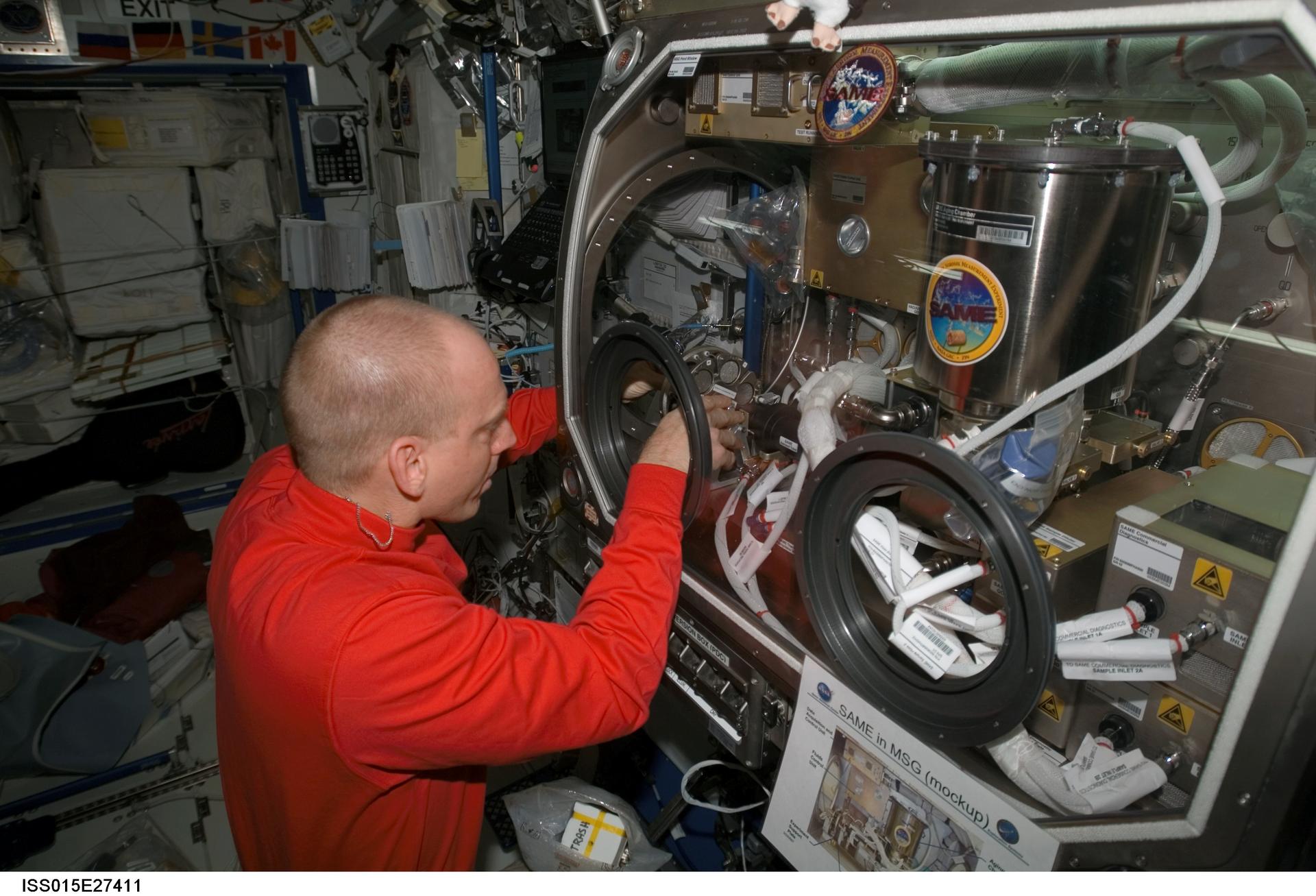
SAMEPSI-102
The experimental results show that, for the materials tested, a substantial portion of the smoke particles are below 500 nm in diameter.
PSI-102 Reports SAME Final Science Report, page 4
The smoke transport model demonstrated that mixing dominates the smoke transport and that consequently detection time lags are longer than in normal gravity.
PSI-102 Reports SAME Final Science Report, page 4
The small diameters for the Kapton and Teflon will make detection of this smoke challenging for light scattering devices, on the other hand the large sizes seen with the lamp wick and silicone would generate very large signals on a light scattering system, suggesting that detection of these particles against the background environment will require a detection system capable of measuring more than one moment of the particle size distribution.
PSI-102 Reports SAME Final Science Report, page 27PSI-102 Reports SAME Final Science Report, page 48
The aging results show substantial increase in the average particle sizes with them rising to over 1 Ιm for the aged silicone diameter of average mass.
PSI-102 Reports SAME Final Science Report, page 27
The preliminary results from these experiments indicate that substantial differences in the size distributions of the smoke particles are evident for the four materials that were tested.
PSI-102 Reports SAME Final Science Report, page 57
For the conditions of the SAME experiment, all samples produced significant numbers of sub-micron particulate that are better detected using an ionization smoke detector.
PSI-102 Reports SAME Final Science Report, page 57
Smoke particulate produced in low-gravity was found to be typically 50% large in count mean diameter than similar conditions in normal gravity.
PSI-102 Reports SAME Final Science Report, page 66
The resultant sizes were all below 300 nm suggesting that discriminating smoke from spacecraft dust possibly could be achieved by detecting in the sub-micrometer range.
PSI-102 Reports SAME Final Science Report, page 66
Numerical modeling of smoke transport in the US Lab Module of the ISS predicted that actual detection times can be quite long and strongly dependent on location and the presence of obstructions.
PSI-102 Reports SAME Final Science Report, page 66
The Comparative Soot Diagnostics (CSD) experiment that flew in the Glovebox on STS-75 demonstrated that the smokes with solid particulates created in microgravity formed longer chains, and aggregated into larger particles than those created in normal Earth gravity.
PSI-102 Science Documents SAME Baseline Concept Description Doc, page 7
Experience with CSD showed dramatic cases where clearly visible smoke streams were not always detectable by the smoke detectors while invisible smoke streams were readily detected.
PSI-102 Science Documents SAME Baseline Concept Description Doc, page 11
Overall the detection times were dominated by the circumferential flow, the axial flow from the intermodule ventilation and the smoke source strength.
ISS Destiny Laboratory Smoke Detection Model, page 1
In order to simulate the detection of a pre-fire overheated-material event, samples were heated to temperatures below the ignition point.
PSI-102 Reports SAME Final Science Report, page 3
Suppression
Findings from BASS and FLEX on how a flame goes out.
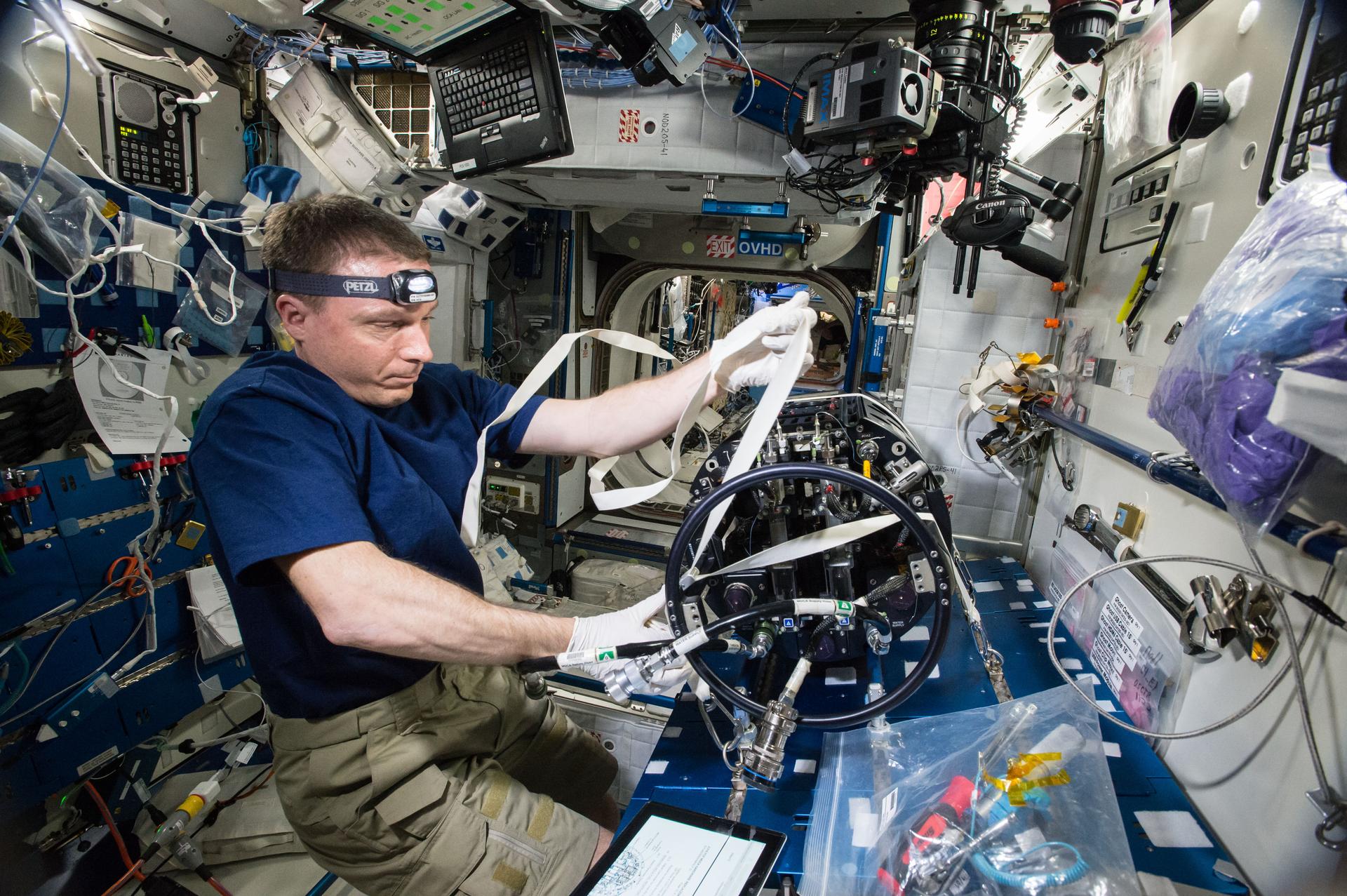
BASSPSI-26
By decreasing concurrent-flow speed to a very low value (around 1 cm/s), quenching extinction was observed.
PSI-26 Science Documents FlammabilityAspectsofFabric USNationalCombustion.2013, page 1
Based on the trends, it appears that an opposed-flow quenching extinction limit can be extrapolated to exist at an air flow speed of less than 1 cm/s.
PSI-26 Science Documents FlammabilityAspectsofFabric USNationalCombustion.2013, page 1
The observation of the quenching extinction branch is only possible at microgravity, since otherwise any buoyant flow generated would take the system out of the low-speed flow regime.
PSI-26 Science Documents FlammabilityAspectsofFabric USNationalCombustion.2013, page 1
FLEXPSI-69
In reduced gravity, droplets would burn steadily with a xenon mole fraction of 0.50 but would not burn steadily if helium or carbon dioxide mole fractions were 0.50.
Combustion of Methanol Droplets in Air-Diluent Environments with Reduced and Normal Gravity, page 1